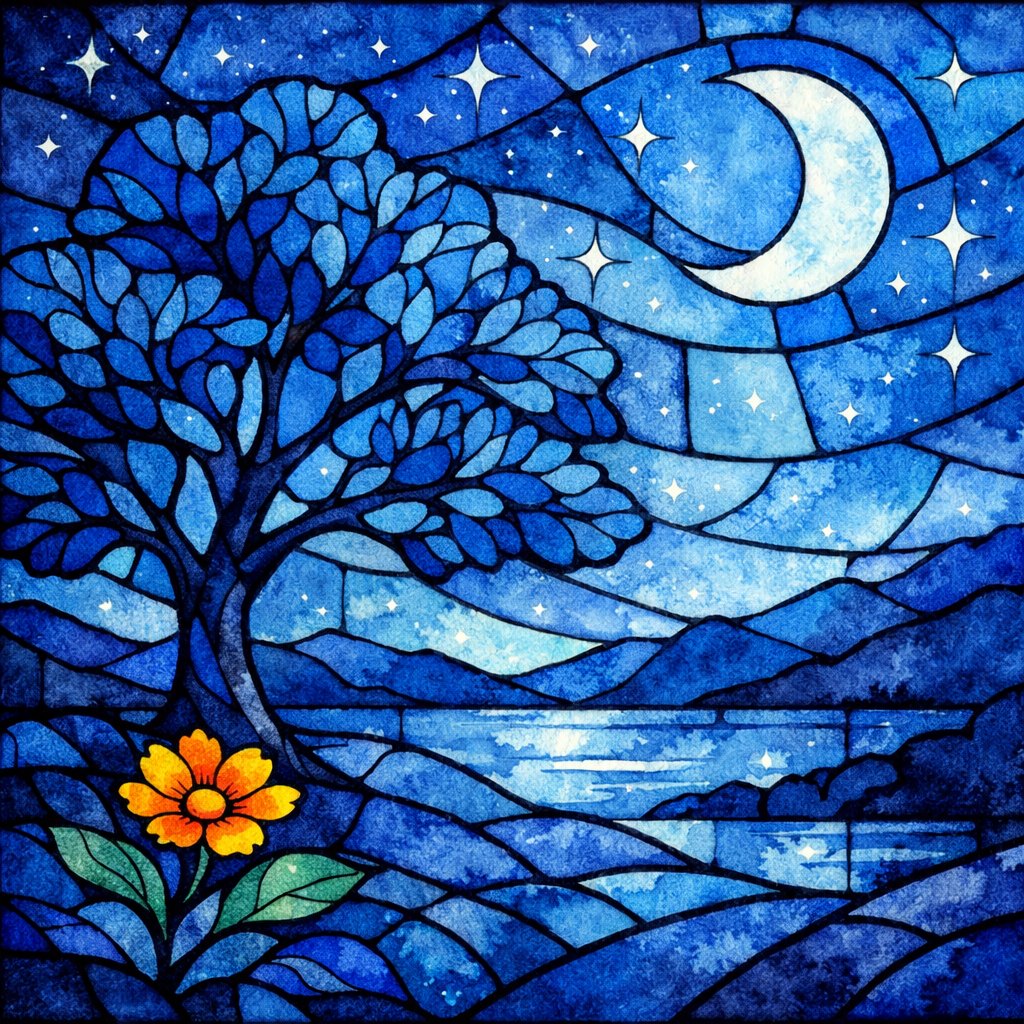
You know what’s annoying about watercolors? When I’m painting with watercolors and I’m going for a deep, luscious emerald green or a stunning sapphire blue, and what I get instead looks like… well, like sad, watered-down dishwater.
If you’ve been painting with watercolors for a while (or even if you’re just getting started), you’ve probably experienced this frustration. You see these amazing paintings with colors so rich and vibrant they practically jump off the page, and you think “How on earth did they do that?”
Well, my friend, I’m here to tell you it’s not magic, and it’s definitely not about having some special artistic gene you weren’t born with. Getting rich jewel tones in watercolor is absolutely doable, and I’m going to share everything I’ve learned about making watercolors sing like little jewels.
Understanding What Makes Jewel Tones Actually Work
First, let’s talk about what we mean by jewel tones. Think rubies, emeralds, sapphires, amethysts – those deep, saturated colors that have both richness and clarity. They’re not muddy, they’re not chalky, and they definitely don’t look washed out.
The secret? It’s mostly about pigment concentration, the right color choices, proper technique, and yeah – your paper matters more than you probably think.
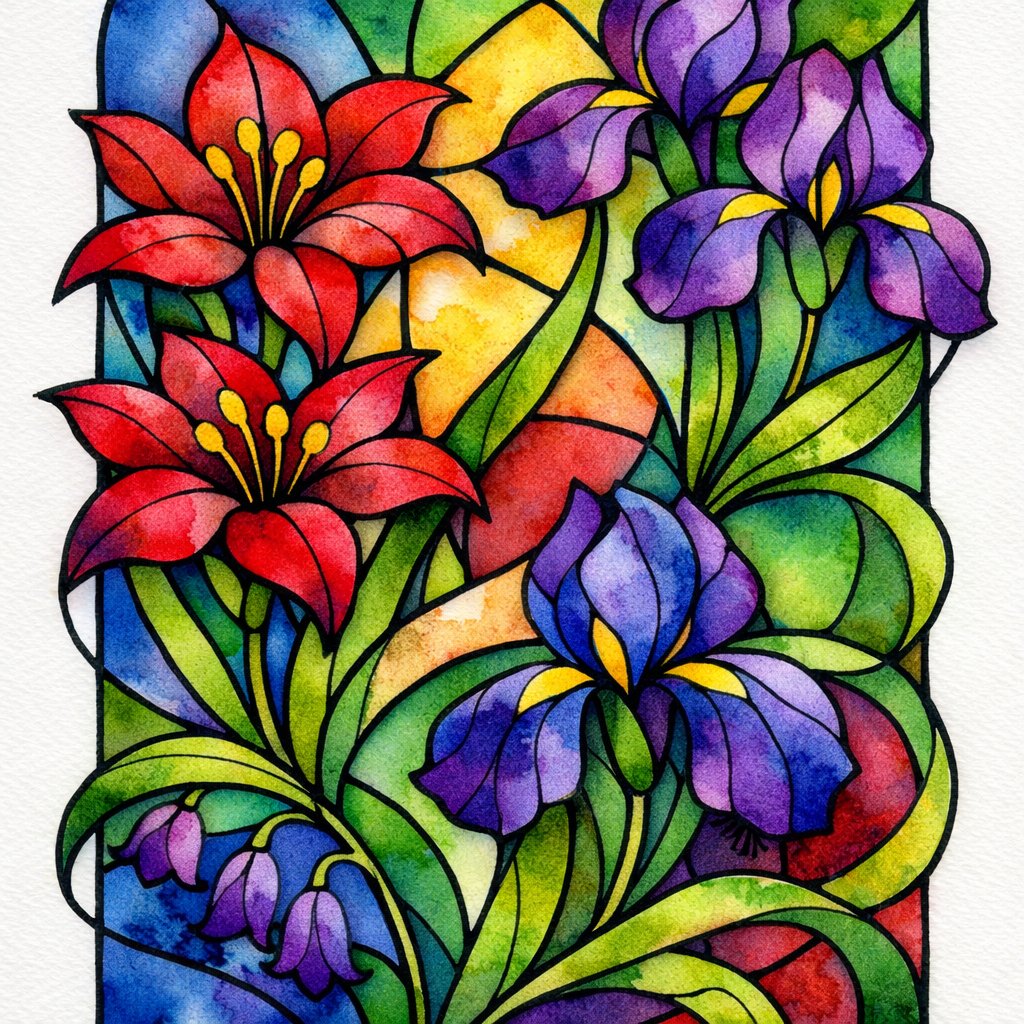
The Pigment Load Mystery Solved
Here’s something I wish someone had told me years ago: not all watercolor paints are created equal. Some tubes or pans have way more actual pigment packed into them than others. It’s like comparing fresh-squeezed orange juice to that frozen stuff – technically, both are orange juice, but come on, we all know which one is better.
Look for paints labeled as “professional” or “artist grade.” Yes, they cost more. But here’s the thing – you’ll actually use less paint to get better results because the pigment concentration is so much higher. That tube that seems expensive? It’s going to last you ages because you don’t need to squeeze out half of it to get decent coverage.
Student grade paints have fillers and binders that dilute the pigment. That’s why you can paint layer after layer and still end up with something that looks wishy-washy instead of jewel-like.
Single Pigment Colors Are Your Best Friends
Check the labels on your paint tubes – you’ll see things like “PB29” or “PV19” or other letter-number combinations. These are pigment codes, and they tell you what’s actually in the paint.
For the richest jewel tones, you want single-pigment colors. Here’s why: when paint manufacturers mix multiple pigments together to create a color, you lose some of that crystal-clear intensity. It’s like looking through one pair of sunglasses versus two pairs stacked on top of each other – each layer dulls things a bit.
Some great single-pigment options for jewel tones:
- Phthalo Blue (PB15) – gives you that incredible sapphire
- Quinacridone Rose (PV19) – your ruby red
- Phthalo Green (PG7) – emerald dreams right here
- Quinacridone Magenta (PR122) – deep, rich, gorgeous
- French Ultramarine (PB29) – a slightly warmer blue that’s stunning
- Quinacridone Gold (PO49) – liquid amber
- Perylene Maroon (PR179) – deep garnet richness
Your Paper Is Literally Drinking Your Paints
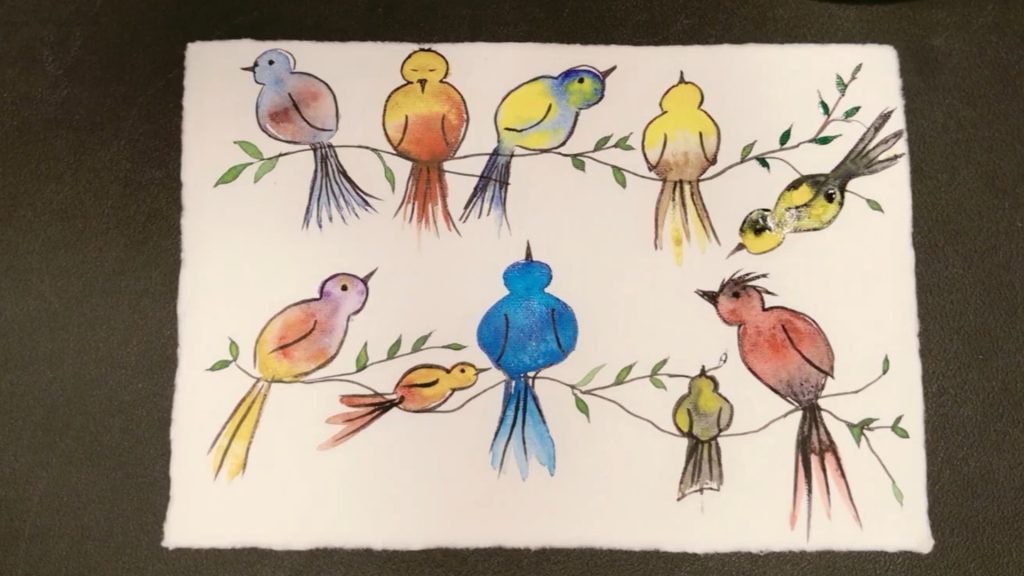
Here is a good example of using the same paints as the other paintings featured in this article, but on a no name 100% cotton paper.
Don’t let that 100% cotton label lead you astray, as it did me. If the paper is simply cotton without some of the stabilizers good brands use, it will drink your pigment and leave it washed out.
Again, we need to have a serious talk about paper because this is probably the biggest thing holding your jewel tones back, and hardly anyone talks about it in these terms.
Here’s what’s happening with cheap paper: it’s like a sponge. And not in a good way. The fibers are loose and thirsty, and when you apply your beautiful, carefully mixed jewel-tone color, the paper literally sucks that pigment right down into its depths like a drain.
What you see on the surface is just a fraction of the pigment you applied. The rest has disappeared into the paper’s interior where it does you absolutely nothing for your painting.
It’s like pouring expensive wine onto sand – such a waste!
I was wondering why my colors looked so flat and dull. For a long time, I was blaming my technique, my paints, my brushes – everything except the real culprit, which was my paper.
Good watercolor paper does something completely different.
Good watercolor paper does something completely different. Quality paper (we’re talking 100% cotton, 140lb/300gsm or heavier) goes through a special treatment process called “sizing.” Think of sizing like a protective coating or sealant that’s added to the paper fibers – sometimes mixed right into the paper pulp itself (internal sizing) and sometimes applied to the finished sheet’s surface (external sizing). This treatment prevents the paper from acting like a sponge and soaking up all your paint. Instead, it keeps your pigment sitting on or near the surface where you can actually see it
When you paint on properly sized cotton paper, your jewel tones stay bright and intense because the pigment particles rest on top of those strong cotton fibers instead of disappearing into a papery black hole. The colors practically glow because light can reflect off the white paper underneath the pigment layers and bounce back through the transparent paint.
The papers that I have had consistently good results with are: Arches, Baohong and Magnani1404. You might have access to other types where you live. No matter. Just make sure that it is 100% cotton and 140lb/300gsm or heavier. Buy a small packet and experiment if that paper is appropriate for your favorite watercolor techniques.
The more water you like to use, the heavier your paper should be.
Here’s a test that blew my mind: Take the same paint mix and apply it to cheap paper and good cotton paper side by side. On the cheap stuff, the color will look immediately duller, and you might see it spread out in a fuzzy, uncontrolled way that bleeds into the fibers. On good paper, the color stays rich, the edges stay within your wet areas, and you can actually see the vibrancy you mixed up.
Plus – and this is absolutely crucial for building jewel tones – good paper lets you layer without destroying the surface.
As you build up rich colors with multiple washes, cheap paper starts breaking down, pilling up, and it might even turn into a fuzzy mess by the second or third layer. Good cotton paper can take four, five, six layers without falling apart, which is essential for building that deep, jewel-like intensity.
The other thing about quality paper and jewel tones specifically? The texture matters. Cold-pressed (medium texture) paper has enough tooth to hold pigment beautifully while still giving you smooth washes. Hot-pressed (smooth) paper is fantastic for super intense, flat jewel tones because there’s no texture to break up the color – this is especially important if you’re doing something like a stained glass effect where you want the colors to be absolutely solid and vibrant.
I know cotton paper is more expensive. Looking at a pad that costs $30-40 feels like a lot compared to a $7 student pad. But here’s the thing: would you rather have 30 sheets of paper that make all your expensive paints look sad and washed out, or 10 sheets that make your colors absolutely sing?
Quality paper is honestly the difference between your paintings looking amateur or professional – it’s that significant for color vibrancy.
The Water Ratio Game (And Why Less Is Usually More)
For the rich jewel tones, you want to think creamy, not soupy. When you’re mixing your paint, you want enough water to make it flow smoothly, but not so much that you’re painting with tinted water.
Load your brush with paint, add water gradually until you get a consistency somewhere between melted ice cream and light cream. That’s your sweet spot for jewel tones.
We’ve been experimenting in our weekly Painting Tips with Mari sessions (members only, join here), with creating stained glass-style backgrounds. For those, we might even want the paint more concentrated – thick and creamy with just enough water to make it brushable.
Layering for Deep & Rich Colors
Here’s where watercolor gets really fun and where you can achieve colors that look almost three-dimensional. You build up incredible depth and richness by layering colors, but you’ve got to do it right.
First layer goes down – let it dry completely. And I mean completely. Not mostly dry. Not “well, it looks dry.” Bone dry. Go make yourself a cup of tea and come back. Touch it with the back of your hand. If there’s even a hint of coolness, it’s still damp, and if you paint over it, you’ll disturb what’s underneath.
Then add your next layer. Each layer intensifies the color and adds depth. Three or four layers of a good, strong mix can give you colors so rich they practically vibrate off the page.
The key is that each layer needs to be fairly strong on its own. If you’re painting with super-diluted color and trying to layer it up, you’ll be there all day and still end up with something pale.
Glazing: How to Make Your Colors Glow
Glazing deserves special attention because it’s the technique that creates that luminous, lit-from-within quality that makes jewel tones so stunning.
Here’s how it works: you put down one layer of transparent color, let it dry completely, then glaze another transparent color over the top. The light passes through both layers, bounces off the white paper, and comes back through, creating this incredible luminous effect that you just can’t get with a single layer.
For example, glaze Quinacridone Gold over a dry layer of Quinacridone Rose, and you’ll get this rich, luminous orange-red that looks like it’s glowing. Glaze Phthalo Blue over French Ultramarine for a blue so deep and rich it looks three-dimensional.
The key word here is transparent. Some watercolors are more opaque (like Cadmiums and Cerulean Blue). While those colors have their place, they’re not great for glazing because they block light instead of letting it pass through.
Most paint tubes will indicate transparency with a little square symbol that’s either empty (transparent), half-filled (semi-transparent), or filled (opaque). For experimenting with glazing, stick with the transparent ones.
Strategic Color Placement Makes Everything Pop
Here’s something interesting: jewel tones look even more jewel-like when they’re next to their complementary colors or surrounded by more neutral tones.
That deep emerald green? It’ll look even richer next to a reddish undertone or surrounded by some soft grays. Your ruby quinacridone rose will absolutely sing against cooler blues and greens.
You don’t need to paint everything in intense jewel tones. In fact, if you do, nothing will stand out and the whole painting can feel overwhelming. Use your rich colors strategically. The contrast makes your jewel tones look even more spectacular.
Think about actual jewelry – a ruby pendant looks more stunning against skin or fabric than it would sitting in a case surrounded by other rubies competing for attention.
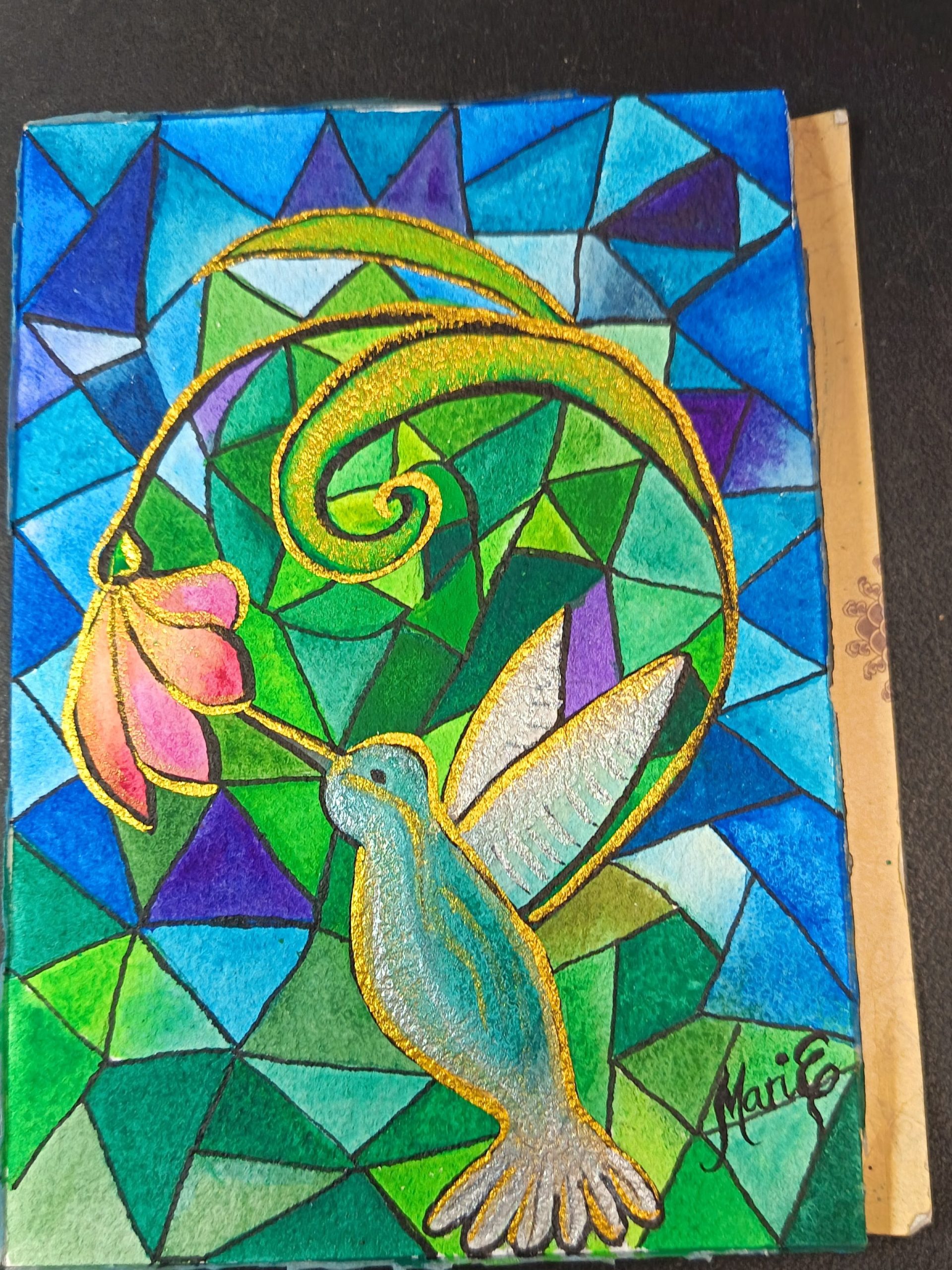
This principle works beautifully in paintings too. In a recent hummingbird piece we worked on, the bird itself was painted in softer, more dimensional greens and golds with subtle gradients, while the background featured flat, brilliant jewel-tone triangles in blues and greens. The contrast between the dimensional subject and the vibrant flat background made both elements shine.
Flat Application vs. Dimensional Painting: Both Have Their Place
One thing I’ve discovered is that jewel tones can be stunning whether you apply them flat and bold or build them up with dimension and gradients – and knowing when to use each approach makes a huge difference.
Flat, intense jewel tones have this amazing graphic quality. When you lay down a rich, even wash of color and leave it alone, it has a boldness and clarity that’s perfect for modern, contemporary looks or decorative effects. This is where that concentrated paint-to-water ratio really matters – you want enough pigment that the color stays vibrant and even across the entire area.
Dimensional jewel tones with gradients, layers, and variations create depth and realism. This is where your glazing and layering skills come into play. You’re building up light to dark, creating form and shadow, giving things a three-dimensional quality.
The magic happens when you combine both approaches in the same painting. The dimensional bird with its subtle gradients and highlights really pops against those flat, brilliant background triangles. Neither approach would be as effective without the other there for contrast.
One Stunning Application: The Stained Glass Technique
This month our weekly Painting Tips with Mari sessions we have been exploring watercolor stained glass techniques.
The beauty of this approach is the pure, intense jewel tones in defined sections, that look just like actual stained glass. You’re creating areas of flat, rich color separated by dark lines (usually done with a black pen or dark paint), and the effect is stunning.
It forces you to commit to strong color. You can’t be wishy-washy with stained glass effects. Each section needs to be a bold, clear jewel tone. This is excellent practice for mixing and applying concentrated color.
You learn about color relationships. When you’re planning out those sections, you see firsthand how different jewel tones interact with each other – which combinations make each other pop, which ones create beautiful harmony.
It’s forgiving for beginners but stunning at any level. The defined sections mean you don’t have to worry about perfect blending or complicated techniques. Focus on getting that color rich and even within each shape.
In our recent sessions, we painted three tulips standing in a row – two brilliant blue tulips on either end with a smaller purple one in the middle. The background? Geometric triangles filled with warm jewel tones: fiery reds, oranges, vibrant yellows, and deep burgundy. The cool blues and purples of the tulips against that warm, glowing background created this incredible visual impact.
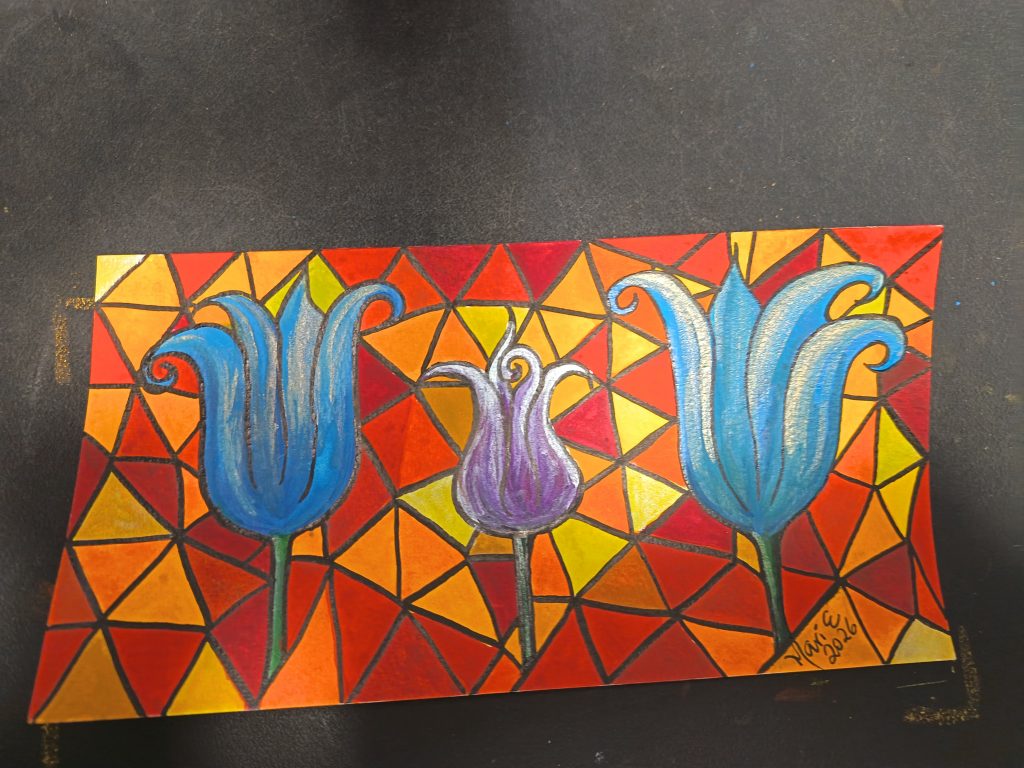
The stained glass approach works for so many subjects – florals, birds, butterflies, geometric abstracts, even landscapes broken into sections. It’s a fantastic way to showcase jewel tones because each color gets its moment to shine in its own defined space.
But here’s the thing – while the stained glass technique is a beautiful way to use jewel tones, it’s just one application. These same principles of rich pigment, proper paper, and concentrated color work for:
- Realistic florals where you’re building up layers of dimensional petals
- Botanical illustrations with their precise, vibrant details
- Abstracts with flowing, intense colors
- Landscapes with dramatic skies and rich foliage
- Wildlife paintings with dimensional subjects
- Decorative patterns and mandalas
The Temperature Factor
Jewel tones tend to be either warm or cool, and keeping them in their temperature family makes them richer and cleaner.
A warm ruby red (like Quinacridone Rose leaning toward orange) looks muddier if you add a cool blue to darken it. Instead, darken it with a warm dark, like Perylene Maroon or a warm red-violet.
The same goes for cool jewel tones. That sapphire blue stays cleaner and richer if you modify it with other cool colors rather than warm ones.
This doesn’t mean you can never mix warm and cool – just be aware that mixing a very warm and very cool color often results in duller, muddier colors. When you want maximum vibrancy and that jewel-like clarity, stay within the same temperature range.
However – and this is important – combining warm and cool jewel tones in the same painting (not mixed together, but placed next to each other) creates incredible visual interest. Those tulips with cool blues and purples against warm reds and oranges? That temperature contrast is part of what makes it so striking.
Use a White Palette
This seems like such a small thing, but it matters more than you’d think. Use a white palette – porcelain, white plastic, or even a white ceramic plate.
You need to see exactly how rich and intense your color is before you commit it to paper. On a colored or wooden palette, you can’t accurately judge your color strength.
Let Your Darks Be Dark
One mistake I see all the time (and made myself) is being afraid of really dark darks. But here’s the thing – your jewel tones will look richer and more vibrant when you have a good range of values in your painting.
Don’t be scared to mix up or layer up some really deep, dark versions of your jewel tones (without using black!).
A deep sapphire blue in shadow that is almost black-blue. A ruby red in its darkest deep, wine-dark burgundy.
These darks make your mid-tone jewel colors look even more luminous and vibrant by comparison. It’s all about contrast and range.
The Lighting in Your Painting Space Matters
If you’re painting in dim lighting or under yellow-toned bulbs, you might not be able to accurately see the colors you’re mixing and applying.
Natural daylight is best. If you don’t have good natural light in your painting space, invest in a daylight-balanced lamp (they’re not expensive – you can find good ones for $20-40). You want to see your true colors while you’re working.
I can’t tell you how many times I painted something under warm evening lamplight only to look at it the next morning in natural light and wonder what on earth I was thinking.
Avoid These Color-Killers
Let me save you some frustration!
Don’t add white or black watercolor to lighten or darken. White will make your colors chalky and dull. Black will muddy them. If you need a lighter value, use more water. If you need darker, add more pigment, layer up, or mix with a darker version of a similar hue.
Don’t overwork your washes. Once you’ve laid down a wash, leave it alone. Going back into it while it’s drying will disturb the pigment and create uneven, muddy results. Put down your paint confidently and walk away.
Don’t use dirty water. (I am terrible at this! ) Murky water equals murky colors. Keep two containers – one for rinsing your brush, one with clean water for mixing with your paints.
Don’t mix warm and cool versions of the same color expecting brightness. A warm blue (like Ultramarine) mixed with a cool blue (like Phthalo) will give you a duller result than using one or the other straight.
Don’t rush the drying between layers. I know I’ve mentioned this already, but it’s so important I’m saying it again. Patience between layers is what separates beautiful, clear jewel tones from muddy messes.
A Simple Exercise to Build Your Jewel Tone Skills
Here’s something practical you can do right now to get better at mixing and achieving rich jewel tones:
Pick three single-pigment colors from your palette – let’s say Phthalo Blue, Quinacridone Rose, and Quinacridone Gold. On a piece of your good watercolor paper (not the cheap stuff!), create intensity scales for each color.
Start with the most concentrated mix you can make (thick and creamy), paint a small square, then gradually dilute with water and paint squares showing each stage from super intense to very pale. This shows you exactly what each pigment can do at different concentrations.
Then, on another piece of paper, mix each color with each other color in different ratios. You’ll discover some absolutely stunning jewel tones you never knew you could make. I found an incredible deep garnet mixing Quinacridone Rose with Perylene Maroon that I never would have thought to try without doing this exercise.
Keep these color charts in your sketchbook and actually refer to them. They’re your personal roadmap to the exact jewel tones you want.
Be Patient With the Process
Here’s the truth: getting really rich, vibrant jewel tones takes time and patience. You’re often building up layers, waiting for things to dry, glazing, waiting again. It’s not a fast process.
But that’s okay. Some of us got into watercolor thinking it would be this quick, spontaneous medium, and it can be – but not when you’re going for these deep, complex jewel tones. For this kind of work, you need to slow down.
Put on some good music, make yourself comfortable, and embrace the waiting time between layers. Use it to step back and really look at your painting, plan your next move, or work on another painting while the first one dries.
In those paintings above, when I thought I was finished with all of the layers and everything was completely dry, I realized that some of the triangles were still pretty dull. I went back over those dull triangles with brighter colors, or sometimes even the metallic paints, until I was satisfied with all of the bits.
The results are absolutely worth the patience.
Final Thoughts: It’s All Connected
The thing about achieving rich jewel tones is that everything I’ve talked about works together. You can’t just fix one thing and expect magical results.
You need good pigments AND good paper AND the right water ratio AND proper layering technique AND patience. It’s like baking – you can’t leave out the flour and expect the recipe to work just because you used the best butter.
But here’s the good news: once you get all these elements working together, the results are absolutely stunning. You’ll paint something with colors so rich and vibrant that you’ll actually surprise yourself. And that feeling? That’s what keeps us painting.
Start with one thing – maybe invest in one really good tube of Quinacridone Rose or Phthalo Blue. Or buy a few sheets of quality cotton paper. Or practice your layering technique. Each improvement you make will give you noticeably better results, and that’s encouraging enough to keep going.
The jewel tones are absolutely achievable. You don’t need to be a professional artist or have some special gift. You just need good materials, good technique, and the willingness to practice and experiment.
Whether you’re painting realistic florals, trying your hand at stained glass effects, creating abstracts, or exploring any other style, these principles will help you achieve those colors that make people stop and say “Wow, how did you get that color so rich?”
So grab your paints, put out a fresh sheet of that good paper, and go make something that glows.
Happy painting!