
Watercolor looks deceptively simple—until you try to control it. The paint spreads beyond your lines, dries into hard edges while you’re still blending, and one careless brushstroke becomes permanent.
That loss of control can feel infuriating, especially if you came here accustomed to mediums that cooperate.
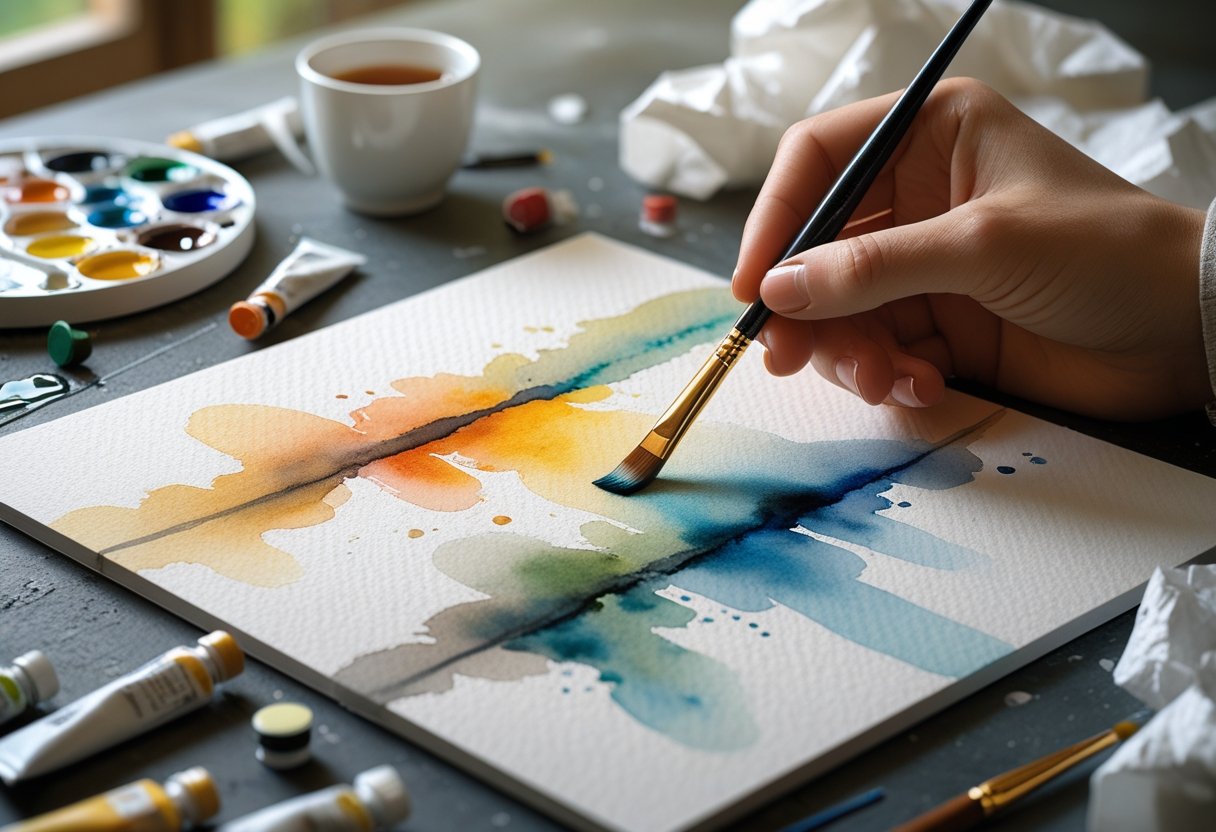
Watercolor is magical because water, pigment, and paper interact in ways you cannot fully control or easily correct. Unlike other mediums, you commit early, work with transparency, and accept that mistakes usually became happy accidents.
Watercolor asks you to slow down, observe closely, and respond instead of forcing outcomes.
Why Watercolor Requires a Different Mindset
Watercolor requires you to think about light, water, and timing simultaneously. The medium rewards careful planning and observation, but it also exposes every misstep in ways that feel uncomfortably revealing—especially when you’re starting out.
Learning to Think in Layers
Watercolor stays transparent, even when you apply a strong color. Light passes through the paint and reflects off the paper, which means every mark shows—and stays visible.
You can’t paint over mistakes the way you would with acrylics or oils. That forces you to think several steps ahead, planning around the whites you’ll need before you ever touch the brush to paper. In watercolor, white comes from what you don’t paint, not what you add later.
Transparency shapes everything:
👉 Colors shift based on what sits beneath them
👉 Dark values require patience and multiple thin layers
👉 Paper quality directly affects how much light reflects back
But here’s what makes it worth the challenge: transparency is also what gives watercolor its luminosity.
The medium asks you to plan, yes—but also to let go. You can guide the paint, lift it, adjust it, but you can’t control it completely. There’s a kind of magic in that partnership, in creating something beautiful without knowing exactly how it will turn out.
Water: Friend and Wildcard
Water moves faster than your brush and doesn’t wait for you to catch up. It spreads, blooms, and flows according to gravity, paper texture, and timing—not your intentions.
You don’t control watercolor through force. You control it through preparation: how much water sits in your brush, how wet your paper is, how saturated your pigment. Get the setup right, and the paint cooperates. Get it wrong, and no amount of correction will save you.
| Condition | Result |
|---|---|
| Wet paper + wet paint | Soft edges, blending |
| Dry paper + damp paint | Controlled strokes |
| A lot of water | Backruns and blooms |
Instead of fighting movement, you learn to guide it.
With practice, you start to recognize when to step back, wait a bit and let the paint finish the work.
Layering and Timing
Layering in watercolor depends on drying time. Each layer must dry fully before the next one, or colors lift and muddy.
This waiting can feel slow, especially when you want to fix something quickly. Yet timing protects clarity and keeps colors luminous.
You also need to judge how dark a wash will look once dry. Wet paint always appears darker, which makes early decisions feel uncertain.
Helpful habits include:
- Testing color strength before applying
- Using fewer layers when possible
- Letting earlier washes stay visible
How Materials Change Everything
Watercolor feels difficult partly because your materials respond quickly and unpredictably. Small differences in paper, paint, and brushes change how water moves, how color settles, and how much control you have.
What About the Paper?
Paper shapes nearly every watercolor experience. Cellulose paper absorbs water unevenly (or sometimes does not absorb it at all, letting it flow everywhere at once), which causes streaks, blooms, and dull color.
Cotton paper—especially 100% cotton—has not been created equal. Generally, it’s true that cotton paper absorbs more slowly and evenly, giving you time to adjust a wash before it dries.
You still have to experiment.
What paper works best for you is really dependent on the style of watercolor you favor. Some watercolor techniques that use a thick mix of paint (cream or thicker) might be alright on different styles of paper.
Those of you who are members might have noticed in the last couple of months I have experimented with a new type of paper. It was handmade 100% cotton paper.
I thought that if it was 100% cotton, it would be alright… after all, I have been having such great results with the other 100% cotton papers, like Arches and Baohong. Wow was I disappointed!
This paper felt more like a blend of fabric and paper – was soft and pliable, did not feel like it had any additives in it which is NOT a good thing. In a paper like Arches the additives make the colors pop and the paper resist tearing.
My failure of a paper, whose brand I do not remember at all, was a stack of pages in a clear envelope.
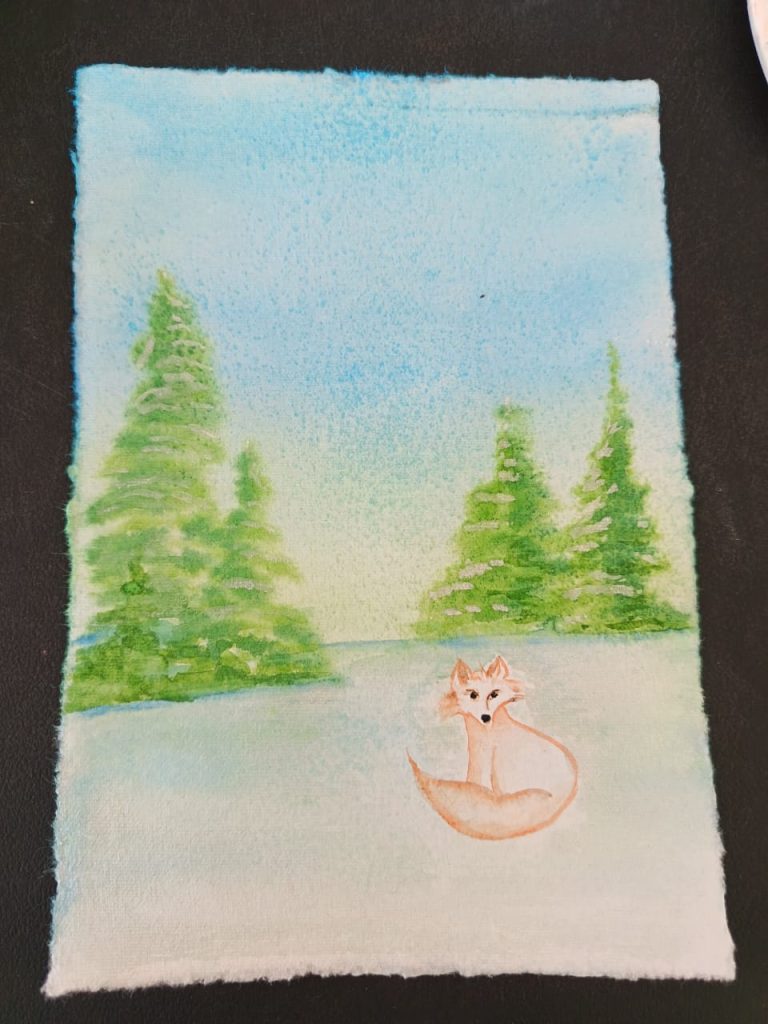
It absorbed too much, washed out colors and was unpredictible. In some spots the paint moved rapidly and in other ones it just sat there. The biggest difference was how DULL my paints looked on that paper.
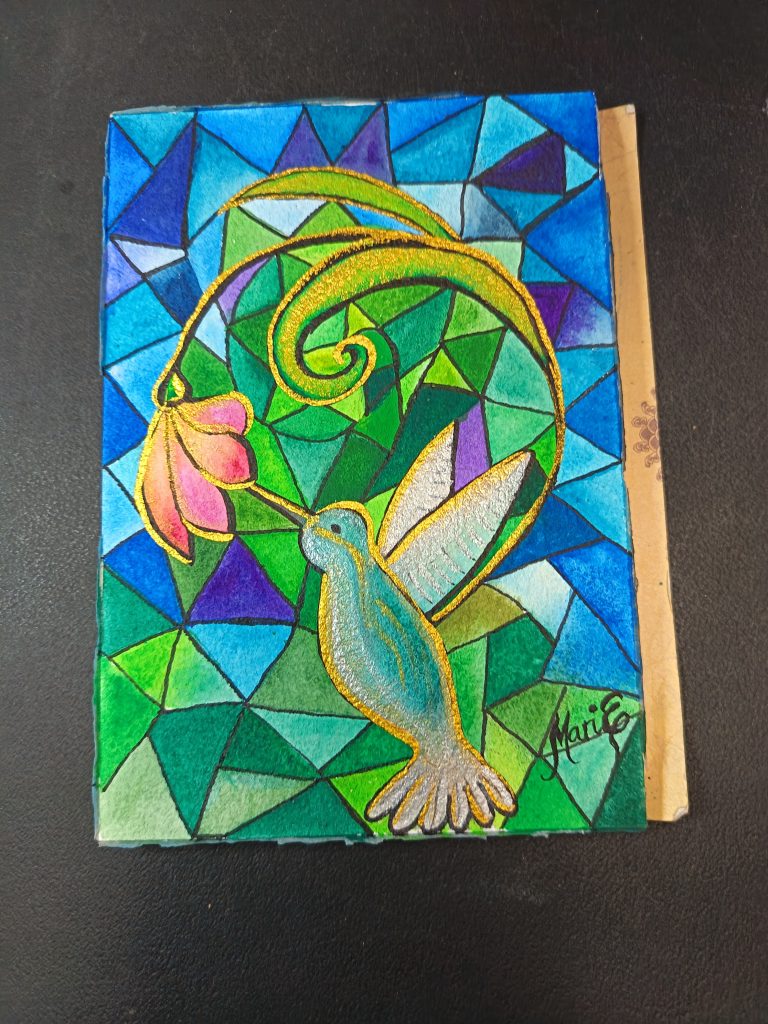
It made a world of difference to switch back to a good paper. Just look at this comparison.
This was done on the no name paper:
And this was done on Baohong Artist Quality paper – SAME PAINTS!
Weight matters too. Lighter paper, like 140 lb (300 gsm), buckles under heavy water. Heavier paper stays flatter and holds washes more calmly.
Surface texture also affects control:
- Hot press feels smooth and shows every brush mark clearly
- Cold press balances texture and flow
- Rough encourages broken washes and soft edges
Paint and Pigment Quirks
Watercolor pigments behave differently from one another, even in the same palette. Some pigments spread widely in water, while others stay close to where you place them.
Artist-grade paints use higher pigment loads and fewer fillers. They respond more predictably and mix cleaner colors.
Student-grade paints often feel muddy because they rely on multiple pigments in a single pan. Granulating pigments settle into the paper texture, creating speckled effects.
Staining pigments sink quickly and resist lifting. Neither is better, but knowing which you use helps you anticipate results instead of fighting them.
Brush Choices
Brushes control how water enters your painting. A brush that holds too much water can flood small areas.
One that holds too little forces you to overwork the surface. Natural hair brushes, like sable or squirrel, carry large amounts of water and release it smoothly.
Synthetic brushes feel firmer and offer more resistance, which some artists prefer for detail work. Shape matters as much as material.
- Round brushes handle most tasks, from washes to fine lines.
- Flat brushes create clean edges and even strokes.
- Small brushes encourage tight control but dry quickly.
Choosing a few reliable brushes helps you focus on observation rather than correction.
Techniques That Really Test Your Patience
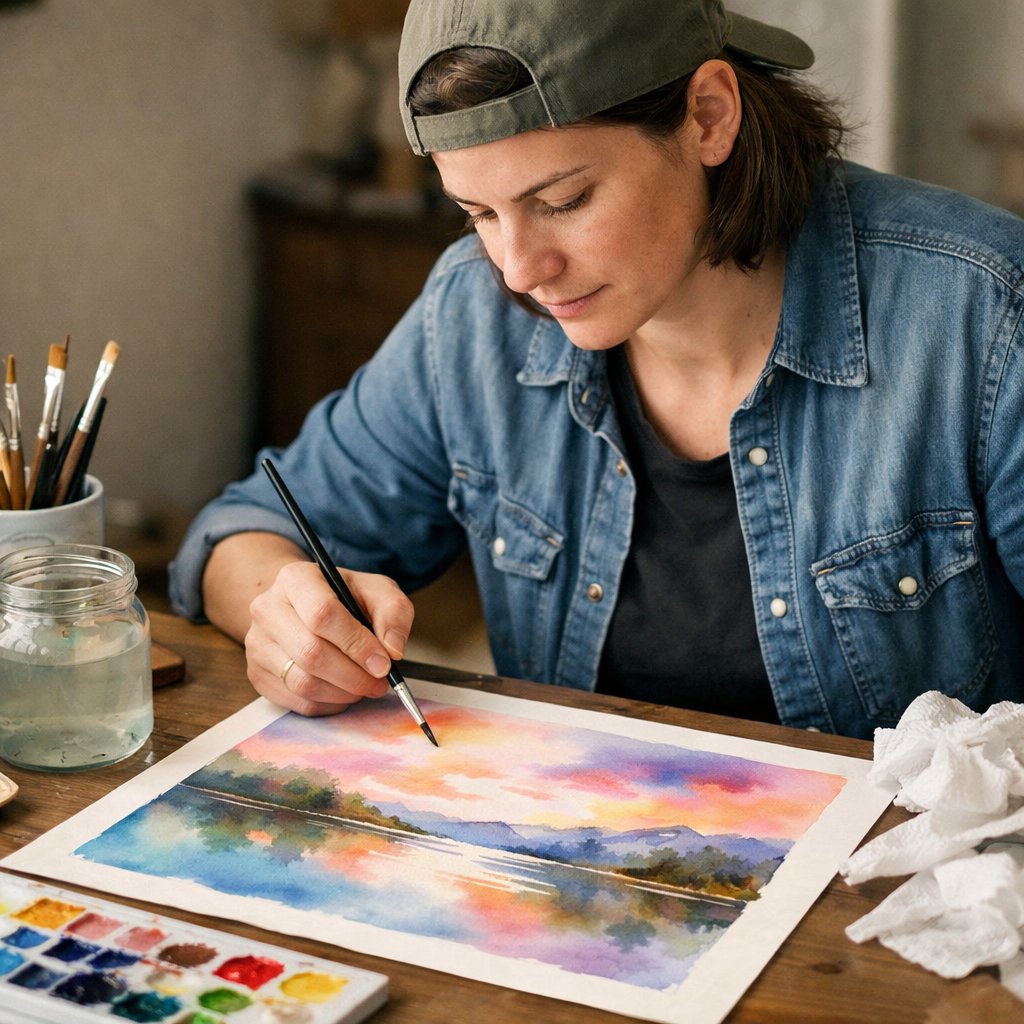
Watercolor asks you to slow down and pay close attention to water, timing, and restraint. Small changes in moisture, pressure, or sequence can shift a painting in ways you cannot reverse.
The Mental Side of Watercolor
Watercolor challenges your habits as much as your technique. You often struggle not because of skill gaps, but because the medium asks you to think, plan, and react in unfamiliar ways.
Letting Go (a Little)
You may come to watercolor expecting it to behave like pencil or acrylic. That expectation creates tension.
Watercolor responds to timing, moisture, and gravity more than pressure or correction. You cannot easily erase or paint over mistakes.
This reality can trigger hesitation, especially when you want clean edges or exact shapes. The paint rewards preparation, but it resists micromanagement.
You help yourself by shifting where you apply control. Focus on planning washes, values, and drying time, not on forcing details.
Helpful mindset shifts:
- Control the setup, not the outcome
- Decide when to stop touching the paper
- Accept small imperfections as part of the surface
When you relax your grip, your brushwork often becomes clearer and more confident.
Going with the Flow
Watercolor moves on its own. Pigment blooms, edges soften, and colors mix in ways you did not plan.
This unpredictability can feel unsettling, especially when you want consistent results. Drying speed adds pressure.
Once the paper changes from wet to damp, every stroke behaves differently. You must watch closely and respond rather than rush.
Many experienced painters treat surprises as information. Instead of fighting this behavior, you can learn from it.
Here are some unpredictable effects and how to approach them:
| Effect | What to Do |
|---|---|
| Backruns | Adjust water balance, not panic |
| Soft edges | Let them suggest form |
| Color mixing | Limit pigments per wash |
Finding Your Own Rhythm
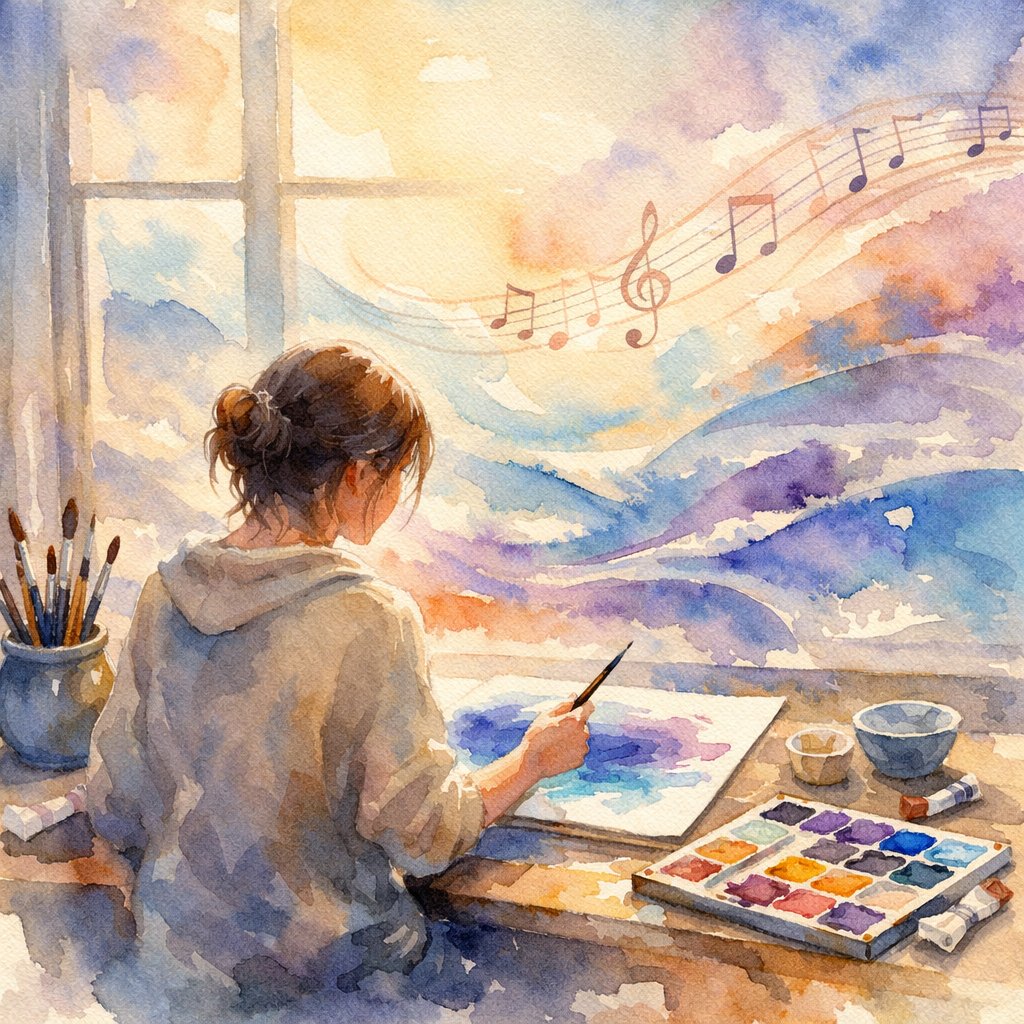
Watercolor rewards patience more than pressure. You grow by noticing what happens on the paper, accepting uneven progress, and giving yourself time to build familiarity with water, pigment, and timing.
Learning from Slip-Ups
Mistakes show you how watercolor actually behaves. A backrun, muddy mix, or hard edge often points to too much water, poor timing, or overworking.
When you pause to study the result, you gain practical feedback. Try treating each painting as a record rather than a verdict.
After a session, note one or two specifics:
- Water level: too wet, too dry, or uneven
- Timing: painted into wet, damp, or dry paper
- Handling: brushed once or reworked repeatedly
You don’t need to fix everything at once. Focus on a single adjustment in the next painting.
This slow narrowing of attention builds control without strain. It mirrors how experienced painters refine their habits over years.
Enjoying the Process
Watercolor feels hardest when you expect certainty.
It feels lighter when you allow movement and variation to exist without correction.
You enjoy the process more when you paint small, simple subjects and stop early.
Try setting small limits that support enjoyment:
| Limit | Purpose |
|---|---|
| 20–30 minutes | Prevents overworking |
| 2–3 colors | Keeps mixes clean |
| One brush | Encourages simpler marks |
Paint for observation, not display.
Let colors mingle.
Watch edges form and dry.
And most of all, enjoy the process.