
Have you ever heard of Payne’s Grey pigment?
It’s that beautiful bluish‑grey color so many of us reach for when painting skies, shadows, or distant trees. It’s soft in a light wash, dramatic in a darker layer, and somehow always seems to fit.
But did you know this color is named after a real painter—William Payne?
Payne was born in London
William Payne came into the world in 1760. He started out as a draughtsman for the Board of Ordnance, making careful, technical drawings. It was steady work, but not exactly inspiring. Eventually, he turned toward art in London, where he began to explore landscapes.
At that time, most draughtsmen were focused on topographic accuracy—drawing land as if it were a map. Payne wanted more. He leaned into a softer, more poetic way of capturing scenes. Instead of just showing what a place looked like, he wanted to show how it felt.
Payne was a pioneer
Payne loved to experiment. One of his biggest changes was dropping the pen outlines that most watercolorists used. That gave his paintings a looser, more natural look. He also worked on ways to show sunlight and atmosphere—those subtle effects that bring a painting to life.
These ideas made watercolor feel more expressive and approachable. In many ways, Payne helped move watercolor from being a tool for draftsmen into being a respected art form.
Recognition and influence
Payne showed his work at the Royal Academy, the leading stage for artists in England. He even earned the respect of Sir Joshua Reynolds, the Academy’s president. That’s no small thing.
But the part of his legacy most of us know today is the pigment that carries his name. Payne’s Grey became linked to him because he used it so often. The mix of blue, black, and sometimes a touch of red gave him a versatile neutral—richer than black, softer than straight grey. Other artists quickly picked it up, and it’s been a staple on palettes ever since.
Think of William Payne
Next time you see that beautiful bluish‑grey in your palette, think of William Payne. He wasn’t afraid to break habits and try something new. His name may live on through a pigment, but his real gift was showing us that watercolor could be freer, softer, and more expressive than anyone thought at the time.
So when you paint a misty forest, a stormy sky, or the cool shadow under a flower, you’re carrying a little of his spirit forward.
Payne’s Grey Pigment in Action
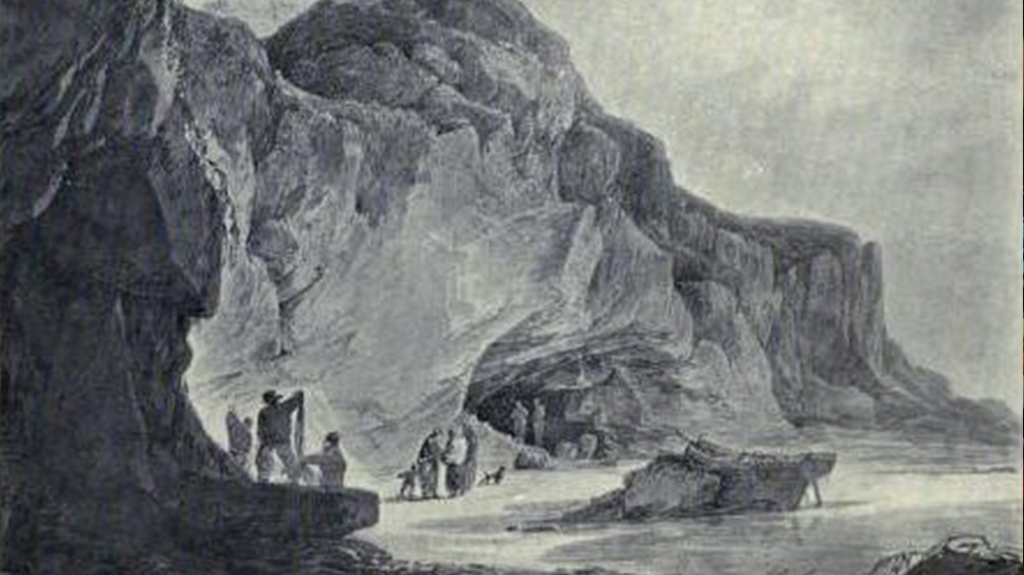
Painting is Smuggler’s Cave by W. Payne
Ready to Practice with Payne’s Gray?
If you’d like to explore this pigment in your own work, landscapes are a wonderful place to start. The Tree and Forest Fundamentals Collection has seven step‑by‑step tutorials, each giving you plenty of chances to use Payne’s Grey while building your skills.
Payne’s Grey is more than just a color—it’s a reminder of how one painter’s curiosity left a lasting mark on watercolor. Try adding it to your next painting and see what kind of atmosphere it brings.